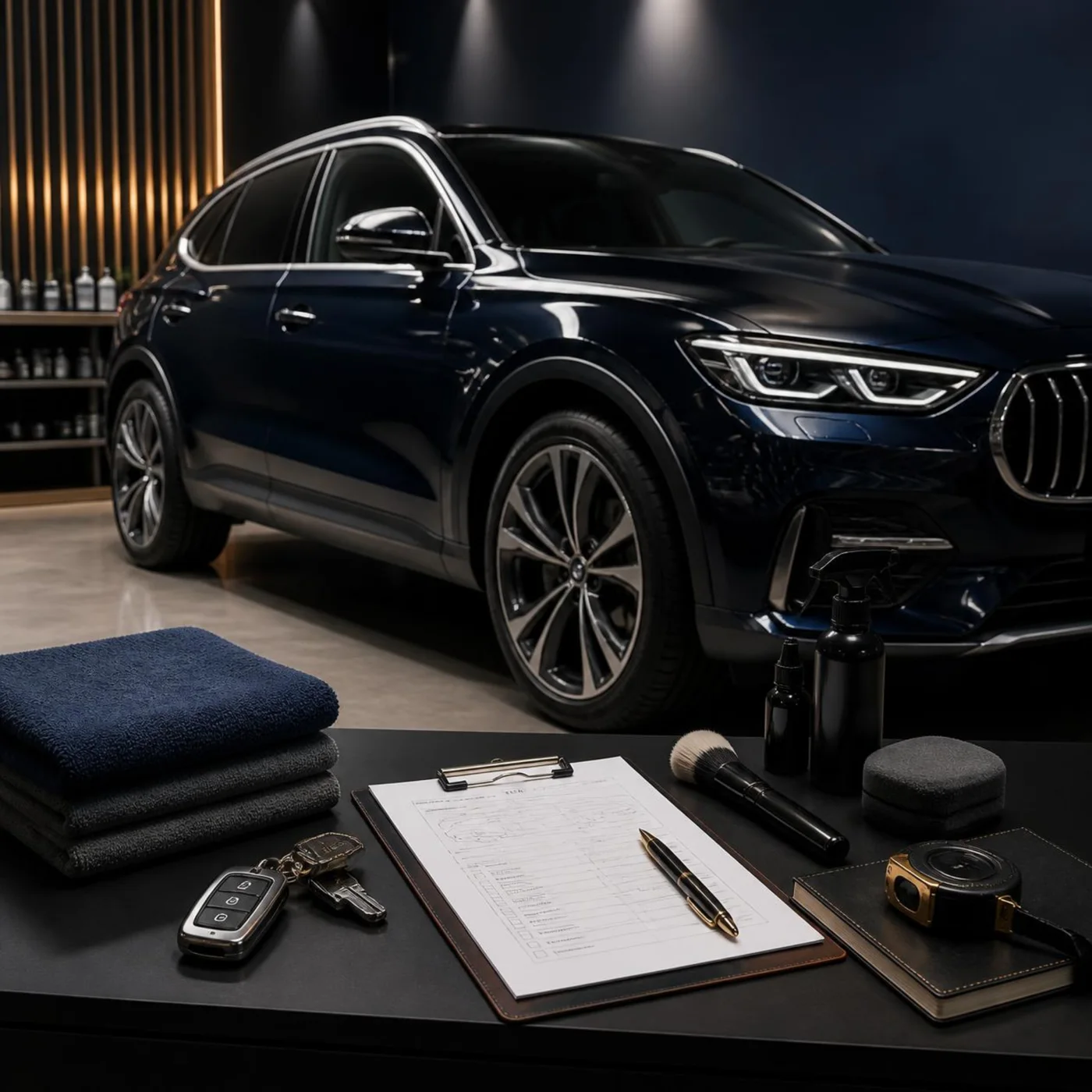
Selling tips: how to get your car ready and get the best result
14 August 2026
If you're looking for tips for selling your car, the good news is that most of what makes a difference is straightforward. It's less about tricks and more about being organised and honest. Here's what actually matters.
Sort your paperwork first
Before you do anything else, find your V5C logbook. You'll need it whoever you sell to, and it proves the car is legally yours to sell. If you've lost it, you can apply for a replacement from the DVLA, but this takes time, so do it early.
Gather your service history too, even if it's patchy. Receipts, stamps in a book, digital records from a garage — all of it helps build a picture of how the car's been looked after. If you've got the original handbooks, spare key, and any parcel shelf or charging cables that came with it, dig them out. Missing bits are minor on their own, but they add up.
Check the MOT history is up to date and see how long is left on the current certificate. A car with several months of MOT remaining is generally easier to sell than one that needs testing again straight away.
Presentation matters, but don't overdo it
A clean car creates a better first impression, and that's true whether someone's viewing it in person or you're getting a price online. A proper valet, inside and out, is worth the hour or two it takes. Empty the boot, clear out the glovebox, and get rid of any personal clutter.
You don't need to spend money on expensive detailing or minor cosmetic repairs before selling. Small stone chips, light scuffs on alloys, or a scratch that's been there for years won't usually change the outcome much, and you're unlikely to get that money back. Save any spending for genuine safety issues, like a cracked windscreen in your line of sight or a warning light that needs sorting.
Be honest about condition
This is the part that trips people up most. It's tempting to talk up a car or gloss over a problem, but it rarely works in your favour. If there's a dent, a warning light, a known fault, or the car's been in a bump, say so upfront.
Being upfront means the price you're given is more likely to be the price you actually get. When condition gets discovered later rather than declared early, that's usually where haggling and last-minute deductions creep in. If you're selling to us, this is exactly why we ask straightforward questions when you get an instant valuation — the more accurate the details, the more solid the price. Our approach is simple: the price we agree is the price you get, with no surprises on the day.
Timing can work in your favour
Car values move a bit depending on the season and wider market conditions, but you can't always predict or control that. What you can control is not leaving things until the last minute. If your MOT is about to run out, or you know you're changing jobs and losing a company car, start the process a few weeks ahead rather than the day before.
Selling sooner rather than later also avoids extra mileage, wear and tear, or the car needing another service, all of which can chip away at its value the longer you hang on.
Know what you want from the sale
Before you start getting quotes, think about what matters most to you. Is it the highest possible figure, however long that takes? Or is it a fair price with no hassle and a quick, certain sale? Private sales can sometimes fetch more, but they come with viewings, time-wasters, and no guarantee of a sale on any particular day.
If you'd rather skip all that, how selling to us works is worth a read. You get a price in around 30 seconds, and if you accept it, we handle collection and payment without the back-and-forth of a private sale.
Getting ready to sell where you live
Wherever you are in the area, the process is the same. If you're based in Wickford or nearby, selling your car in Wickford has more on how it works locally, including collection.
Common questions
Do I need a full service history to sell my car? No, but it helps. A partial history with some receipts is still useful, and being upfront about gaps is better than saying nothing at all.
Should I fix small dents or scratches before selling? Usually not worth it. Minor cosmetic issues rarely add enough value to cover the repair cost, so it's often better to declare them honestly and let the price reflect it.
What if my car has a fault I don't know the cause of? Mention it anyway, along with any warning lights or symptoms you've noticed. You can check our FAQ for more on how condition affects a valuation, or get a price and see how it's handled.