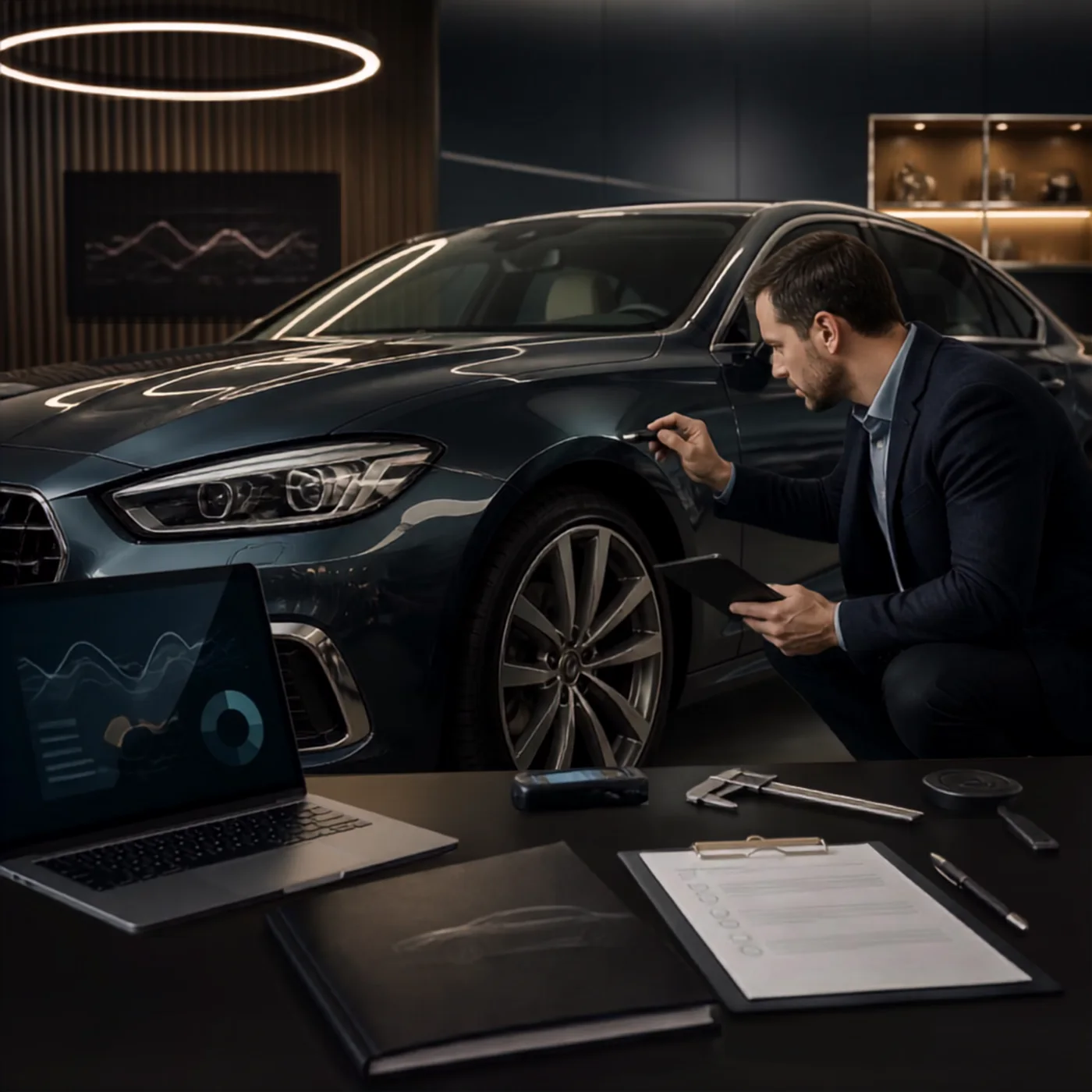
Car valuation explained: how an instant car valuation actually works
10 August 2026
Car valuation explained
Type your reg into any website and you'll get a number back in seconds. That's a car valuation, and most people take it at face value without knowing what's actually behind it. Understanding how an instant car valuation is built helps you spot the difference between a genuine offer and a starting point for negotiation.
This matters more than it sounds. A lot of the frustration people have with selling a car comes not from the number itself, but from that number changing once someone actually looks at the car in person.
What an instant valuation is based on
When you get an instant car valuation, it's typically built from a few core pieces of information:
- The registration number, which pulls basic details like make, model, age and engine size from DVLA data
- Mileage, which you enter yourself
- General market data, showing what similar cars have been selling for recently
From that, a computer generates a guide price. It's a genuinely useful starting point, but it's built on assumptions — because the system has no way of knowing what your specific car is actually like.
Why "guide price" doesn't always mean final price
A guide price assumes an average car of that age and mileage, in reasonable condition, with a full service history, no damage, and nothing unusual going on with the paperwork. Most cars don't tick every one of those boxes perfectly.
This is why so many people have the experience of getting an online quote, then being told on the day that it's "actually worth less" once someone's seen it. Common reasons a guide price gets adjusted downward:
- Missing or incomplete service history
- Cosmetic damage — scuffed alloys, stone chips, interior wear
- Mismatched tyres or worn brakes needing attention
- Non-standard modifications
- Outstanding finance that needs settling
- A V5C logbook that doesn't match the seller's name or address
None of this means the original valuation was dishonest. It just means a guide price is exactly that — a guide, not a guarantee, until someone's actually checked the car over.
How to make sure the number you see is the number you get
The way to close that gap between guide price and final price is to be upfront from the start, and to check how a company actually works before you commit any time to it.
Be accurate about condition. When you request a valuation, describe the car honestly — mileage, any damage, service history, whether it's got outstanding finance. The more accurate your information, the more accurate the price.
Ask what happens after the online quote. Some companies give you a number, then invite you to a physical inspection where the price mysteriously drops. Ask directly: is there room for renegotiation once you arrive, or is the agreed price fixed?
Check the payment terms. Find out when and how you'll actually be paid, and whether there are any fees for collection, admin, or anything else buried in the process.
Understand what "instant" really means. An instant online figure is based on data alone. A confirmed price, one you can actually rely on, usually needs a quick look at the car or a photo check to back it up.
At The Car Buying Club, you can get an instant valuation in about 30 seconds using your reg and mileage. Where we differ is what happens next — once we've agreed a price based on accurate details from you, that's the price you get. No last-minute deductions once we turn up, no surprise fees. You can read more about how it works if you want the full picture before you start.
Getting the most accurate valuation possible
If you want your instant valuation to be as close to the real number as possible, a bit of prep helps:
- Have your V5C logbook to hand so the registration details match exactly
- Know your current mileage rather than estimating
- Be ready to mention any MOT advisories, dents, or mechanical issues
- Check whether there's outstanding finance and roughly how much is left to pay
The more complete the picture you give, the less chance there is of any surprises later. If you're local to Essex, our Wickford car selling page covers how the process works in your area, including collection.
Common questions
Is an instant car valuation accurate? It's a solid starting point based on your reg, mileage and current market data, but it assumes average condition. The final price can move once the car's actual condition and history are confirmed.
Why did my valuation change when I went to sell? Usually because something about the car didn't match the assumptions behind the guide price — service history, condition, or outstanding finance, for example. Being upfront about these details when you first get your quote helps avoid this.
Do I need my V5C logbook to get a valuation? Not for the initial online quote, but you will need it to complete a sale. It confirms you're the registered keeper and matches the car's details, so it's worth having it ready from the start.