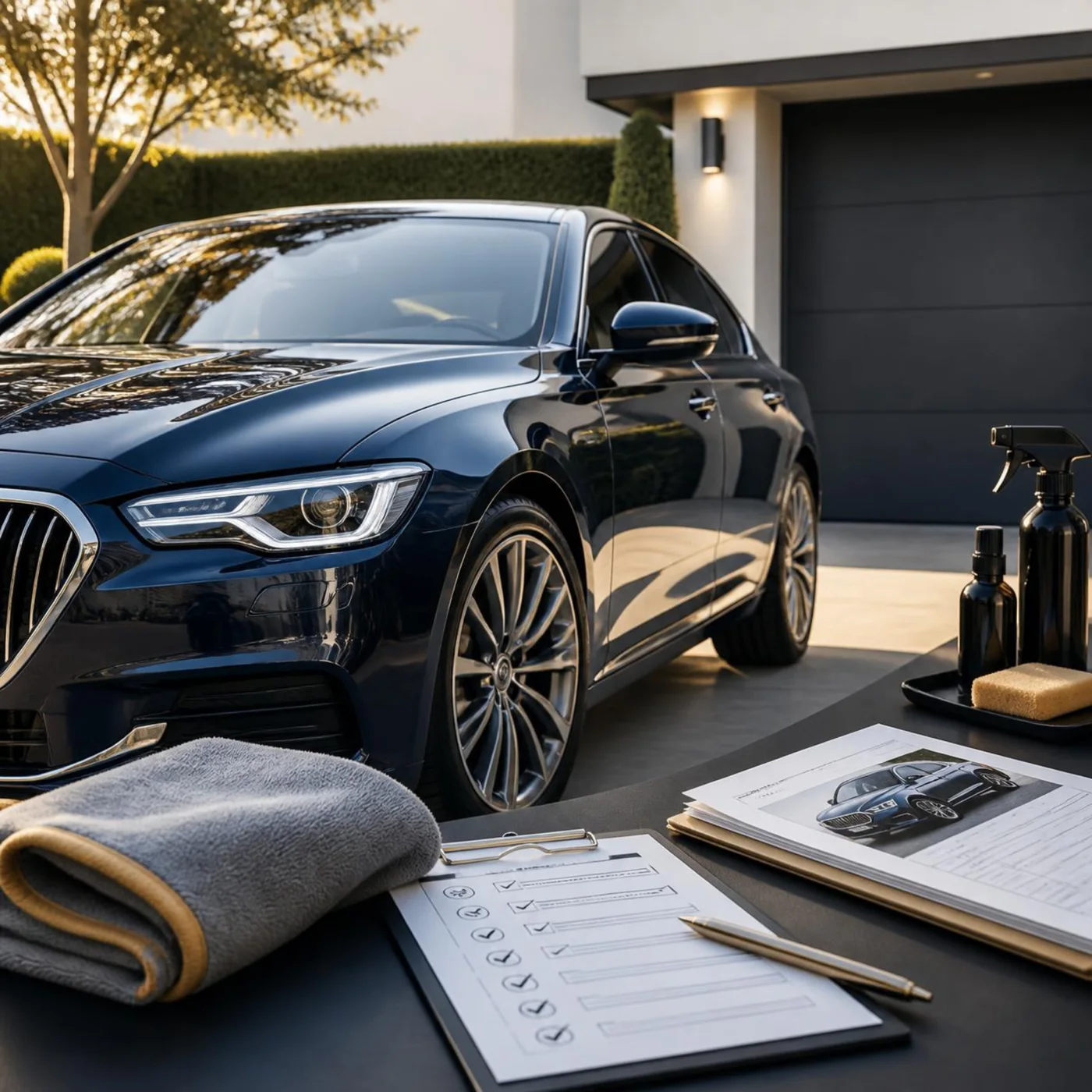
Getting your car ready to sell: the practical bits that actually matter
14 July 2026
Start with the paperwork
Before you think about cleaning products or pricing, sort out the documents. The V5C logbook is the big one — make sure your name and address are current. If you've moved house and never updated it, do that now through the DVLA. It takes a few days, but a logbook that matches your driving licence makes everything smoother.
Gather your MOT certificates if you've kept them, and any service history you have. A folder with invoices for major work — tyres, brakes, timing belt — shows you've looked after the car. Even a handful of receipts is better than nothing. If you've lost everything, don't panic, but be upfront about it. Buyers (including trade buyers like us) prefer honesty to gaps in the story.
Check your MOT history online at gov.uk. It's all there going back years, and it shows mileage at each test. If there's anything odd — a big jump, or a failure for something serious — you'll know what questions might come up.
Clean it properly, but don't go mad
A clean car photographs better and makes a better first impression. That's just true. But you don't need a professional valet or ceramic coating. What actually matters is removing your own clutter and giving it a decent wash.
Empty the glovebox, the door bins, the boot. Take out the car seats if you're done with them, the sat nav sucker marks from the windscreen, the air freshener that's been there since 2019. Hoover the footwells and the seats. If you've got pet hair, a rubber glove or a damp cloth works surprisingly well.
Outside, a wash and a vacuum is plenty. Clean the wheels if they're filthy. If there's thick dirt in the door shuts or the boot seal, wipe it off. You're not hiding anything, just showing the car as it actually is, without the layer of life on top.
Scratches and small dents won't disappear, and buyers know that. Don't spend money trying to fix every mark — you won't get it back. Just make sure the car looks cared for, not neglected.
Be honest about condition
This is the bit people often get wrong. They either undersell a good car or oversell one that's tired. Neither helps.
If something doesn't work — the air con's dead, there's a warning light, the boot lock's temperamental — say so. If you're selling privately, the buyer will find out anyway. If you're selling to a trade buyer, they'll spot it in seconds and adjust the price, so you might as well mention it upfront.
The same goes for service history. If the cambelt's overdue or you've missed a service, don't pretend otherwise. It affects value, but honesty keeps things moving. At The Car Buying Club, we'd rather know what we're looking at than find surprises when the car arrives.
If the car's been brilliant and well maintained, say that too. Don't be shy about one careful owner or full dealer history if it's true. Just keep it factual.
Timing matters more than people think
You can't control the market, but you can avoid selling at the worst possible moment. If your MOT runs out next week and there's an advisory list as long as your arm, either get it done or price accordingly. A car with eleven months MOT is easier to sell than one with three weeks and a scrape-through.
If the weather's been awful and your car's filthy, wait a day or two for a dry spell before taking photos. Natural light and a clean car make a huge difference to how it presents online.
End of the month, end of the financial quarter, just after Christmas — these are times when trade buyers are often busier or have more flexibility. It's not an exact science, but if you have a choice, don't rush.
Know what the car's actually worth
Look at similar cars for sale online — same age, mileage, spec. That gives you the retail price, the price someone hopes to get. Trade value is lower, because there's work and risk involved in reselling. If you're getting quotes from trade buyers, don't expect the same number you've seen on AutoTrader. That's just how it works.
Part-exchange values are often lower again, because you're trading convenience for price. If you want the best possible price, private sale is the route — but it takes time, energy, and comes with its own risks. If you want it gone with no hassle, trade is quicker.
The short version
Get the paperwork in order, clean off the clutter, be straight about condition, and don't rush if you don't have to. These aren't tricks or secrets. They're just the basics that make selling a car easier for everyone involved.
If you'd rather skip the private sale altogether, that's where we come in — but that's a decision for you, not a hard sell from us. Either way, a bit of preparation makes the whole thing less of a headache.