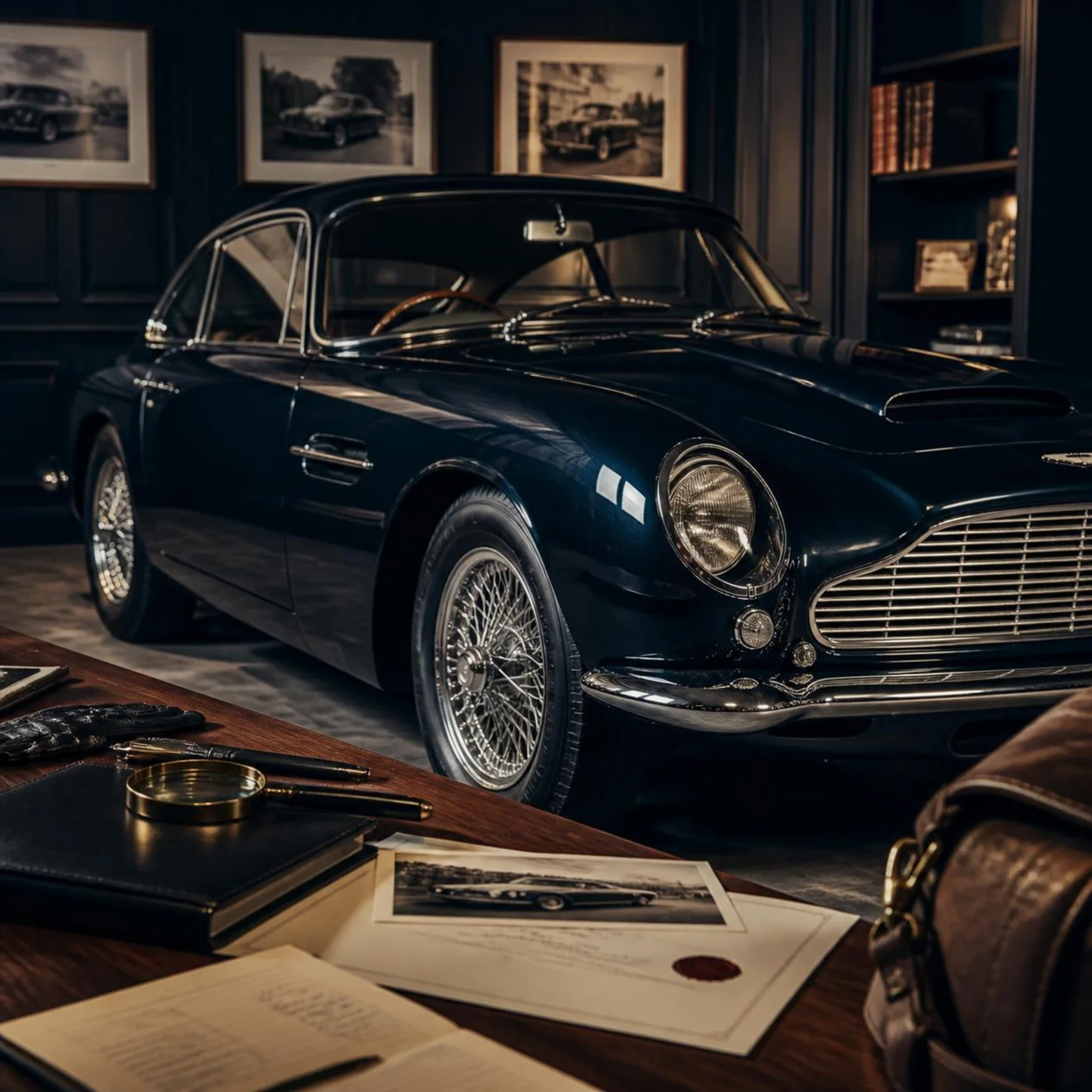
Selling a classic or prestige car: why it needs a different approach
12 October 2026
Selling a classic or prestige car isn't the same as selling a daily runaround
Most cars on the road are bought and sold against fairly predictable rules. Age, mileage, condition, service history — plug those into a formula and you get a sensible ballpark figure. That works fine for the vast majority of cars people want to sell quickly.
Classic, prestige and enthusiast cars don't always play by those rules. A twenty-year-old hot hatch with a genuine low mileage and a full history folder can be worth considerably more than a younger, higher-spec car that's been neglected. A desirable colour combination, original wheels, or a matching numbers engine can swing the value in ways a generic pricing tool simply won't pick up.
If you're selling a classic or prestige car, it pays to understand why these cars need a different approach — and to deal with someone who actually knows what they're looking at.
Why web-form valuations struggle with these cars
Automated valuation tools are built around data: registration, mileage, MOT history, and broad trends for that make and model. That's genuinely useful for ordinary cars, where condition tends to track age and mileage fairly closely.
Enthusiast cars break that pattern. Two examples of the same model, same year, can be worlds apart in value once you factor in:
- Originality — unmodified cars with original parts are often worth more than modified ones, even if the modifications were expensive
- Service and ownership history — a long-term owner with meticulous records adds real confidence for a buyer
- Rarity of spec — certain colours, trims, engines or option packs were produced in smaller numbers and are sought after
- Condition of things a form can't see — paintwork, interior wear, underside condition, whether it's ever had bodywork repairs
A web form can't ask the right questions, and it certainly can't look underneath the car. That's why a number generated in thirty seconds by a generic calculator can end up well wide of what a car is actually worth — in either direction.
What proper valuation actually looks like
Valuing a classic or prestige car properly starts with the same basics as any other car — registration, mileage, condition, service history — but it doesn't stop there. A good buyer will want to understand the specifics: what's original, what's been replaced, whether there's a clear ownership trail, and whether the car has been looked after mechanically as well as cosmetically.
That usually means photos, a proper conversation, and sometimes a physical look at the car before a final figure is agreed. It's a bit more involved than a straightforward daily driver, but it's the only way to arrive at a fair price rather than a guess.
How we approach it at The Car Buying Club
We still start the same way we do for every car: you can get an instant valuation in around thirty seconds using the registration and mileage. For an ordinary car, that figure is often good to go straight away.
For something more unusual — a classic, a prestige model, or a car with enthusiast appeal — that initial figure is a starting point rather than the final word. We'll ask more about the car's history and condition, and where it makes sense, take a proper look before agreeing a price. The principle doesn't change though: once we agree a figure, that's the price you get. No last-minute deductions once we've seen the car, no renegotiating on collection day.
You can read more about how selling to us works — the same honest process applies whether it's a five-year-old family car or something with a bit more history behind it.
Getting your car ready to sell
A few things genuinely help when selling a classic or enthusiast car:
- Gather any history files, old MOT certificates, invoices and receipts — even informal paperwork from previous owners helps
- Note any original parts you've kept, such as original wheels or badges if they've been swapped
- Be upfront about any modifications, repairs or non-standard parts rather than letting them come to light later
- Have the V5C logbook and current MOT (if applicable) ready
Honesty about the car's history speeds everything up and tends to get you a fairer figure, since the buyer isn't pricing in uncertainty.
If you're local to Essex, our sell my car in Wickford page covers collection and the practical side of things, and the same approach applies whether you're nearby or further afield.
Common questions
Will a modified car be worth less? Not necessarily — it depends on the modification and the market for that particular car. Some modifications add genuine value to enthusiasts, while others can narrow the pool of interested buyers. Being upfront about what's been changed helps get an accurate figure either way.
Do I need the car to have a current MOT to sell it as a classic? No, plenty of classic and project cars are sold without a current MOT. It's worth mentioning this when getting a valuation so it can be factored in properly.
What paperwork matters most for a classic car? A continuous service history, old MOT certificates, and anything showing provenance — original invoices, club membership records, or documentation of previous owners — all help build a fuller picture of the car and support a fair valuation.