Selling tips: how to get your car ready and get a fair price
23 September 2026
Selling tips that actually make a difference
If you're looking for selling tips that go beyond "give it a wash", you're in the right place. Most of what affects the price you get isn't about polish — it's about paperwork, honesty, and picking a sensible way to sell in the first place. Here's what genuinely matters.
Get your paperwork in order first
Before you do anything else, find your V5C logbook. Without it, most buyers will hesitate, and it slows everything down. Check the details on it match reality — your name, address, and the vehicle details.
Other things worth gathering:
- Full service history, even if it's a stack of receipts rather than a stamped book
- The MOT certificate, or at least the MOT history (available online via DVLA if you've lost paperwork)
- Both sets of keys, if you have them
- Any receipts for recent work — new tyres, a replaced battery, a cambelt change
None of this needs to be perfect. A patchy history is normal on an older car. What matters is that you can show what you do have and be upfront about gaps.
Presentation matters, but don't overdo it
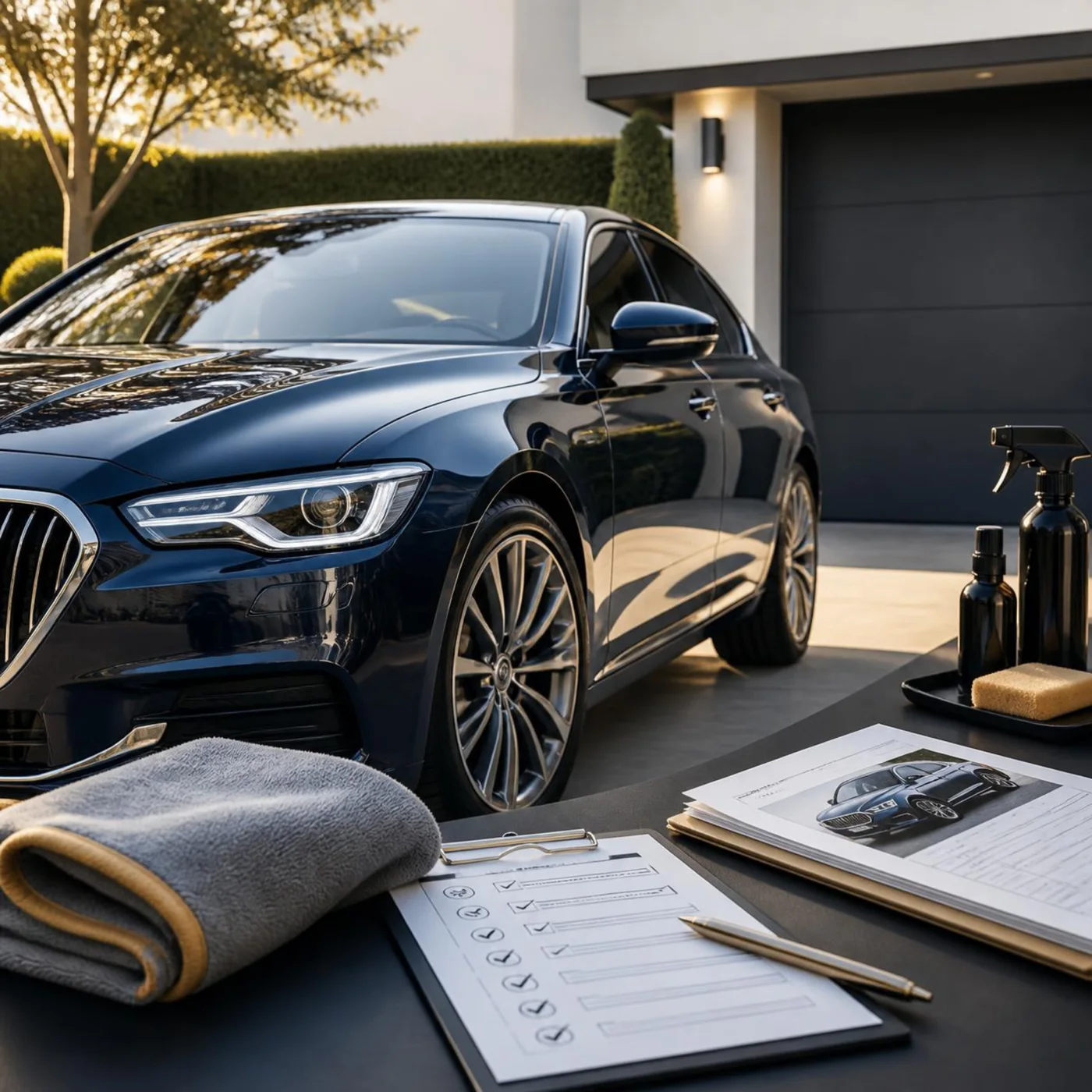
A clean car photographs better and feels nicer to view, but there's a limit to what it changes. A wash, a hoover, and clearing out the glovebox and boot takes twenty minutes and makes a real difference to first impressions. Spending money on a full valet or minor cosmetic repairs rarely pays for itself, especially if you're selling privately or getting a valuation online rather than relying on someone eyeballing the car on a forecourt.
Do deal with the easy stuff: bulbs that are out, a wiper that's perished, tyre pressures that are low. These are cheap fixes that stop small issues becoming reasons for someone to knock money off or walk away.
Be honest about condition
This is the selling tip people skip most often, and it's the one that saves the most hassle. If there's a dent, a warning light, a bit of wear on the clutch, or a known fault, say so upfront. Trying to hide it rarely works — most buyers or valuation processes will spot it anyway, and being caught out mid-sale is far more awkward than mentioning it at the start.
Being upfront also means the price you're quoted is more likely to hold. At The Car Buying Club, this is really the whole point of how selling to us works: you tell us honestly about the car, we get an instant valuation sorted in about 30 seconds, and the price we agree is the price you get. No haggling on the day, no surprise deductions once someone's actually looked at it.
Timing: does it really matter?
There's a lot of chat about the "best time" to sell a car — convertibles in spring, 4x4s before winter, and so on. In practice, for most people, the better question is whether the car is sitting there depreciating and costing you insurance, tax and MOT time while you wait for the perfect moment. If you're ready to sell, selling promptly usually beats holding out for a seasonal bump that may not be worth much anyway.
The one timing factor worth thinking about is your own MOT and tax renewal dates. Selling before you're forced to pay for another MOT or a fresh year of tax can save you money regardless of the season.
Know roughly what your car is worth
Before you commit to any route — private sale, part-exchange, or selling directly — it helps to get an independent sense of value first. An instant online valuation gives you a real number based on your car's actual details, not a guess from a listings site full of optimistic asking prices. It also means you can compare offers properly, rather than accepting the first number someone throws at you.
If you're local to the area, it's worth checking a page like selling a car in Wickford for anything specific to how the process works near you.
Common questions
Do I need a full service history to sell my car? No, but any history helps. Even a folder of receipts or an idea of when things were last done gives a buyer confidence, and it's better to show what you have than to have nothing at all.
Should I fix things before selling? Fix cheap, obvious issues like bulbs and wiper blades. Avoid spending money on bigger cosmetic or mechanical work unless you're certain it'll be reflected in the price — check our FAQ if you're unsure what's worth doing before a valuation.
Is it better to sell privately or to a buyer like The Car Buying Club? Selling privately can sometimes get a higher headline price, but it takes time, involves strangers viewing your car, and payment can be a worry. Selling directly is faster and more predictable, since the price agreed is the price paid, with no last-minute renegotiation.